
Contact Lenses -1.75 - What Does It Stand For
Contact Lenses -1.75 >> It is the power of the contact lenses you are going to buy for your eyes. This is done by the Contact lenses Prescription. It is done by the EYE Doctor. There are Few Tests, measurements & Calculation while contact lenses Prescription test takes place. It is measured to get the right selection of the contact lenses with right power which one's eyes need for correcting the visionary effects.
First
of all, just take a look at the simple chart below. Since we already
know that lens power of 4.00 D or greater requires vertexing at each
meridian, so we start with 4.00 D = add vertex factor of +0.25 D. For
every 2 D power change, you will require a vertex factor change of +0.25
D.
Power of lens Vertex Factor (VF)
4.00 D +0.25 D
6.00 D +0.50 D
8.00 D +0.75 D
10.00 D +1.00 D
12.00 D +1.25 D
14.00 D +1.50 D
16.00 D +1.75 D
Example #1:
OD: -10.00 – 5.00 x 180
OS: +5.00 – 1.00 x 180
Given: Spectacle Rx for OD: -10.00 – 5.00 x 180. What’s the contact lens Rx?
1) Sphere power = -10.00 D –> -10.00 + vertex factor of +1.00 D = -9.00 D at 180th meridian
2) Sphere + Cylinder power = -10.00 – 5.00 = -15.00 D –> -15.00 + VF of +1.50 = -13.50 D at 90th meridian
3) Adjusted Cylinder power = -5.00 D + VF of +1.50 = -3.50 D
4) Estimated Rx = -9.00 – 3.50 x 180 (Need to ADD -0.25 to cylinder power to obtain the Final Rx)
5) Final Rx = -9.00 – 3.75 x 180
Given: Spectacle Rx for OS: +5.00 – 1.00 x 180. What’s the contact lens Rx?
1) Sphere power = +5.00 D –> +5.00 + vertex factor of +0.25 D = +5.25 D at 180th meridian
2) Sphere + Cylinder power = +5.00 – 1.00 = +4.00 D –> +4.00 + VF of +0.25 = +4.25 D at 90th meridian
3) Adjusted Cylinder power = -1.00 D + VF of +0.25 = -0.75 D
4) Estimated Rx = +5.25 – 0.75 x 180 (Need to ADD -0.25 to cylinder power to obtain the Final Rx)
5) Final Rx = +5.25 – 1.00 x 180
Useful Notes:
a) Spectacle plane –> Contact lens plane
(Remember: “CAP” = Closer ADD Plus!!!)
b) Minus spectacle Rx –> contact lens Rx (CLRx) = expect contact lens Rx to be LESS minus.
Ex: SRx = -4.50 D –> CL Rx = -4.25 D
c) Plus spectacle Rx –> contact lens Rx = expect contact lens Rx to be MORE plus.
Ex: SRx = +5.00 D –> CLRx = +5.25 D
- See more at: http://www.optometrystudents.com/pearl/how-to-rapidly-determine-a-contact-lens-prescription/#sthash.vWKP6NKA.dpuf
The formula for a contact lens prescription describes the amount of
refractive error from normal vision. This article will show you how to
read a contact lens prescription.Power of lens Vertex Factor (VF)
4.00 D +0.25 D
6.00 D +0.50 D
8.00 D +0.75 D
10.00 D +1.00 D
12.00 D +1.25 D
14.00 D +1.50 D
16.00 D +1.75 D
Example #1:
OD: -10.00 – 5.00 x 180
OS: +5.00 – 1.00 x 180
Given: Spectacle Rx for OD: -10.00 – 5.00 x 180. What’s the contact lens Rx?
1) Sphere power = -10.00 D –> -10.00 + vertex factor of +1.00 D = -9.00 D at 180th meridian
2) Sphere + Cylinder power = -10.00 – 5.00 = -15.00 D –> -15.00 + VF of +1.50 = -13.50 D at 90th meridian
3) Adjusted Cylinder power = -5.00 D + VF of +1.50 = -3.50 D
4) Estimated Rx = -9.00 – 3.50 x 180 (Need to ADD -0.25 to cylinder power to obtain the Final Rx)
5) Final Rx = -9.00 – 3.75 x 180
Given: Spectacle Rx for OS: +5.00 – 1.00 x 180. What’s the contact lens Rx?
1) Sphere power = +5.00 D –> +5.00 + vertex factor of +0.25 D = +5.25 D at 180th meridian
2) Sphere + Cylinder power = +5.00 – 1.00 = +4.00 D –> +4.00 + VF of +0.25 = +4.25 D at 90th meridian
3) Adjusted Cylinder power = -1.00 D + VF of +0.25 = -0.75 D
4) Estimated Rx = +5.25 – 0.75 x 180 (Need to ADD -0.25 to cylinder power to obtain the Final Rx)
5) Final Rx = +5.25 – 1.00 x 180
Useful Notes:
a) Spectacle plane –> Contact lens plane
(Remember: “CAP” = Closer ADD Plus!!!)
b) Minus spectacle Rx –> contact lens Rx (CLRx) = expect contact lens Rx to be LESS minus.
Ex: SRx = -4.50 D –> CL Rx = -4.25 D
c) Plus spectacle Rx –> contact lens Rx = expect contact lens Rx to be MORE plus.
Ex: SRx = +5.00 D –> CLRx = +5.25 D
- See more at: http://www.optometrystudents.com/pearl/how-to-rapidly-determine-a-contact-lens-prescription/#sthash.vWKP6NKA.dpuf

O.D. : - This stands for Oculus Dexter, a Latin term for right eye. All of the numbers next to this row or column indicate the strength of correction needed for your right eye.
O.S. : - This stands for Oculus Sinister, a Latin term for left eye. All of the numbers following this row or column indicate the strength of correction needed for your left eye.
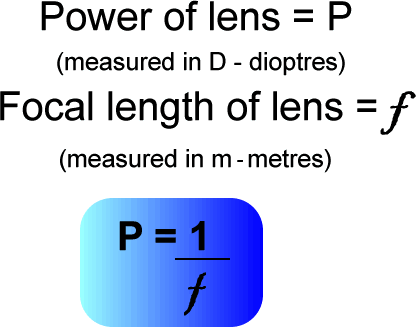
Power (PWR) or Sphere. They are usually the first set of numbers listed in the OD and OS rows/columns. It is common for the correction to differ between the right and left eyes. If you find the term PL, this stands for Plano, and it means the number is 0 and no correction is needed .
 A negative number in this field indicates myopia, otherwise known as
nearsightedness or the ability to see things clearly when they are close
to you, but not when they are far away. For example, if the field under
OD reads -1.75 D, this indicates the person has diopters of
nearsightedness in the right eye.
A negative number in this field indicates myopia, otherwise known as
nearsightedness or the ability to see things clearly when they are close
to you, but not when they are far away. For example, if the field under
OD reads -1.75 D, this indicates the person has diopters of
nearsightedness in the right eye.A positive number in this field indicates hyperopia, otherwise known as farsightedness, or the ability to see well in the distance, but not nearby. For example, if the field under OD reads +1.75, this indicates the person has 1.75 diopters of farsightedness in the right eye.
CYL and AXIS. These numbers indicate astigmatism, a common condition. It is usually caused by an irregularly shaped cornea, but can also be caused by an irregularly shaped lens inside the eye.
CLY stands for cylinder and it is the measure of astigmatism in diopters. Most doctors use a positive number, but if a negative number is given, a lens store may need to convert to a positive number.
AXIS is the degree measurement that is required to bend light to correct the irregular shape of the cornea.
All of the above calculation are taken place before prescribing for contact lenses for particular eyes. There are some other factors which also necessary for the right prescription of the contact lenses.
First
of all, just take a look at the simple chart below. Since we already
know that lens power of 4.00 D or greater requires vertexing at each
meridian, so we start with 4.00 D = add vertex factor of +0.25 D. For
every 2 D power change, you will require a vertex factor change of +0.25
D.
Power of lens Vertex Factor (VF)
4.00 D +0.25 D
6.00 D +0.50 D
8.00 D +0.75 D
10.00 D +1.00 D
12.00 D +1.25 D
14.00 D +1.50 D
16.00 D +1.75 D
Example #1:
OD: -10.00 – 5.00 x 180
OS: +5.00 – 1.00 x 180
Given: Spectacle Rx for OD: -10.00 – 5.00 x 180. What’s the contact lens Rx?
1) Sphere power = -10.00 D –> -10.00 + vertex factor of +1.00 D = -9.00 D at 180th meridian
2) Sphere + Cylinder power = -10.00 – 5.00 = -15.00 D –> -15.00 + VF of +1.50 = -13.50 D at 90th meridian
3) Adjusted Cylinder power = -5.00 D + VF of +1.50 = -3.50 D
4) Estimated Rx = -9.00 – 3.50 x 180 (Need to ADD -0.25 to cylinder power to obtain the Final Rx)
5) Final Rx = -9.00 – 3.75 x 180
Given: Spectacle Rx for OS: +5.00 – 1.00 x 180. What’s the contact lens Rx?
1) Sphere power = +5.00 D –> +5.00 + vertex factor of +0.25 D = +5.25 D at 180th meridian
2) Sphere + Cylinder power = +5.00 – 1.00 = +4.00 D –> +4.00 + VF of +0.25 = +4.25 D at 90th meridian
3) Adjusted Cylinder power = -1.00 D + VF of +0.25 = -0.75 D
4) Estimated Rx = +5.25 – 0.75 x 180 (Need to ADD -0.25 to cylinder power to obtain the Final Rx)
5) Final Rx = +5.25 – 1.00 x 180
Useful Notes:
a) Spectacle plane –> Contact lens plane
(Remember: “CAP” = Closer ADD Plus!!!)
b) Minus spectacle Rx –> contact lens Rx (CLRx) = expect contact lens Rx to be LESS minus.
Ex: SRx = -4.50 D –> CL Rx = -4.25 D
c) Plus spectacle Rx –> contact lens Rx = expect contact lens Rx to be MORE plus.
Ex: SRx = +5.00 D –> CLRx = +5.25 D
- See more at: http://www.optometrystudents.com/pearl/how-to-rapidly-determine-a-contact-lens-prescription/#sthash.vWKP6NKA.dpuf
Power of lens Vertex Factor (VF)
4.00 D +0.25 D
6.00 D +0.50 D
8.00 D +0.75 D
10.00 D +1.00 D
12.00 D +1.25 D
14.00 D +1.50 D
16.00 D +1.75 D
Example #1:
OD: -10.00 – 5.00 x 180
OS: +5.00 – 1.00 x 180
Given: Spectacle Rx for OD: -10.00 – 5.00 x 180. What’s the contact lens Rx?
1) Sphere power = -10.00 D –> -10.00 + vertex factor of +1.00 D = -9.00 D at 180th meridian
2) Sphere + Cylinder power = -10.00 – 5.00 = -15.00 D –> -15.00 + VF of +1.50 = -13.50 D at 90th meridian
3) Adjusted Cylinder power = -5.00 D + VF of +1.50 = -3.50 D
4) Estimated Rx = -9.00 – 3.50 x 180 (Need to ADD -0.25 to cylinder power to obtain the Final Rx)
5) Final Rx = -9.00 – 3.75 x 180
Given: Spectacle Rx for OS: +5.00 – 1.00 x 180. What’s the contact lens Rx?
1) Sphere power = +5.00 D –> +5.00 + vertex factor of +0.25 D = +5.25 D at 180th meridian
2) Sphere + Cylinder power = +5.00 – 1.00 = +4.00 D –> +4.00 + VF of +0.25 = +4.25 D at 90th meridian
3) Adjusted Cylinder power = -1.00 D + VF of +0.25 = -0.75 D
4) Estimated Rx = +5.25 – 0.75 x 180 (Need to ADD -0.25 to cylinder power to obtain the Final Rx)
5) Final Rx = +5.25 – 1.00 x 180
Useful Notes:
a) Spectacle plane –> Contact lens plane
(Remember: “CAP” = Closer ADD Plus!!!)
b) Minus spectacle Rx –> contact lens Rx (CLRx) = expect contact lens Rx to be LESS minus.
Ex: SRx = -4.50 D –> CL Rx = -4.25 D
c) Plus spectacle Rx –> contact lens Rx = expect contact lens Rx to be MORE plus.
Ex: SRx = +5.00 D –> CLRx = +5.25 D
- See more at: http://www.optometrystudents.com/pearl/how-to-rapidly-determine-a-contact-lens-prescription/#sthash.vWKP6NKA.dpuf

